Homeopathy (my 4th week)
Tutorial Activity:
Design a label for an extemporaneously prescribed homeopathic medicine, as you may do if working in a homeopathic clinic or dispensary. Share your label design in your forum post for this session.
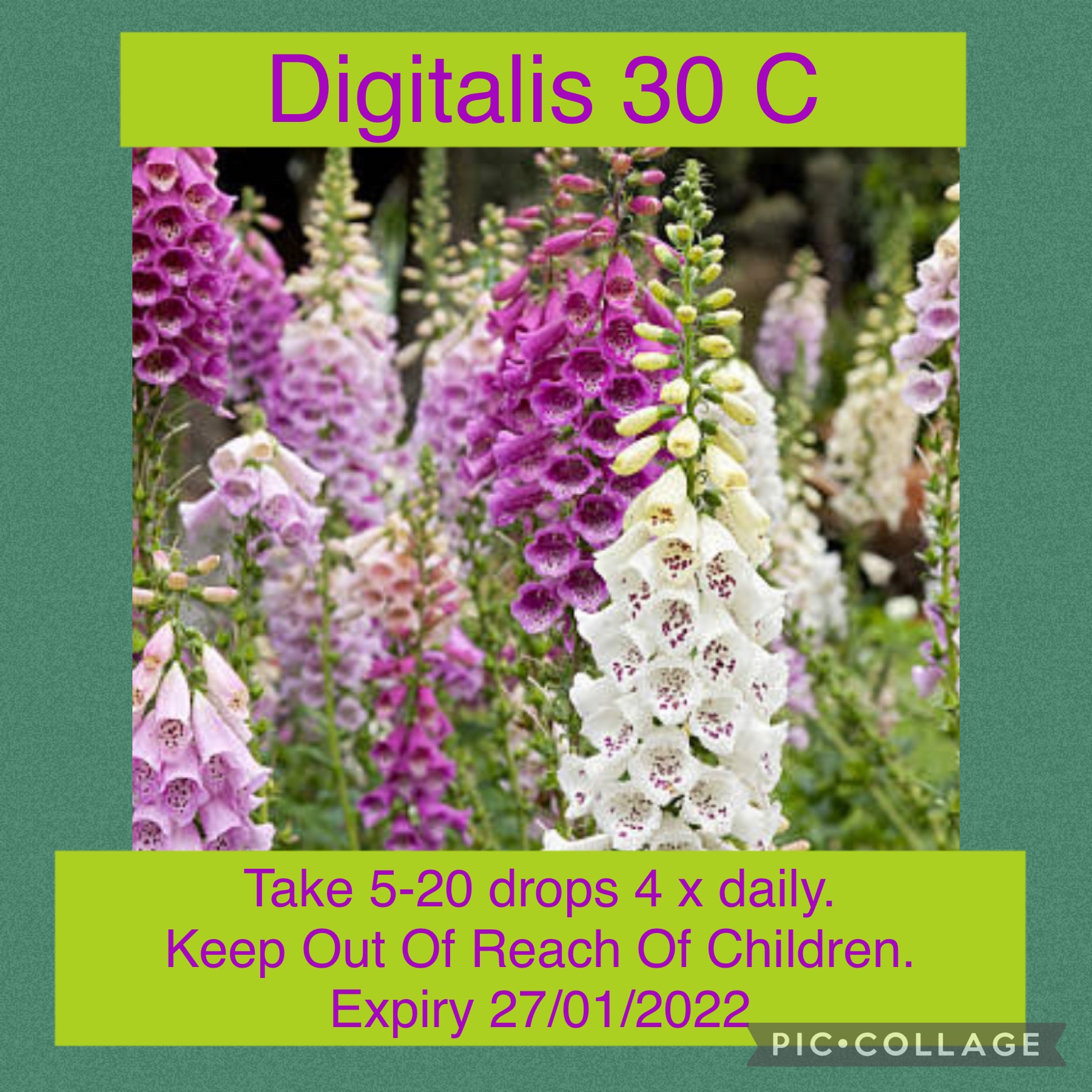
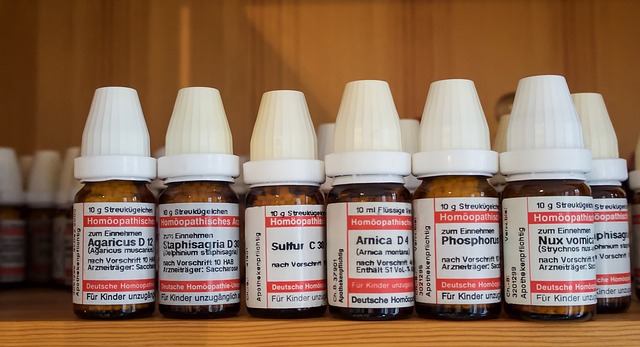
Note, I should have done another side with Ingredients: Digitalis Purpurea 3% of 99 parts Alcohol. This could of course be totally wrong! The picture above (medicines in title picture) looks like best labelling. I’m going by a quick google search again on homeopathy books and have an approx. guide to dosage from what I can make out! When the study Session Guide said – ‘Design a label for an extemporaneously prescribed homeopathic medicine, as you may do if working in a homeopathic clinic or dispensary‘, I was confused about the word extemporaneously!! Please see the link for further into this medicine from the website I found: DIGITALIS PURPUREA by William Boericke, DIGITALIS PURPUREA – Homeopathic Materia Medica – William Boericke (homeopathybooks.in)
Discussion Questions for Tutorial:
What information is useful to include on packaging and labels for homeopathic medicines and why?
Endeavour College Lecture States: ‘While not legally required for extemporaneous prescribing, the following may be required for retail sale and generally recommended‘:
- Name and Contact details of practitioner
- Name of homeopathic medicine/ homeopathic preparation:
- Strength of medicine
- Administration of medicine = dosage
- Patient name
- Date of prescription
- Expiry date
- Homeopathic Preparation
- KEEP OUT OF REACH OF CHILDREN
- (Therapeutics Goods Order No. 69, n.d.)
I missed a few of these and it wasn’t until going back and reading I can see this is important. Also as above, the Therapeutics Goods Order No. 69, nd, requires these specification from practitioners when prescribing for patients as part of Consumer Legislation (Endeavour College Lecture Slides):
Consumer Law
- Consumer law covers sale of goods and services
- Protects consumers from misleading claims, false
- representations, and poor conduct
- Professional association codes of conduct similarly guide
- professional conduct
(Endeavour College Lecture Slides).
How would you feel about taking a homeopathic medicine that was unlabeled and you didn’t know what the substance was?
I would definitely want to know what the name of the substance is I’m taking, along with the potency, expiry date, dosage, and safety guidelines! I wouldn’t take something without these.
What benefits do you see in the homeopathic method of dispensing medicines?
Where do I start? It’s such a wonderful way to get to know a client, by understanding how a remedy can match a symptom picture strictly by the law of similars. There are a variety of ways to prescribe and varying dosages available. A lot of research has been done to prove the science of homeopathy, including understanding nanoparticles, magnetic resonance imaging, solvochromatic dyes, crystalisations, and more being discovered. On the subject of Nanoparticles – Bell, IR, states, in the article, ‘Homeopathy as Systemic Adaptational Nanomedicine’: The Nanoparticle-Cross-Adaptation-Sensitization Model the following:
‘Nanoparticles (NPs) acquire unique biological, chemical, electromagnetic, and quantum properties as a function of their high ratio of surface area to volume. Their ability to cross cell membranes and adsorb other materials onto their highly reactive surfaces makes them excellent herb, nutraceutical, drug, and vaccine delivery vehicles with enhanced bio- availability’. For homeopathic dosing, very low doses of NPs can mobilize hormetic adaptational mechanisms in complex living systems by serving as novel, foreign Stressors to stimulate beneficial compensatory responses in the organism as a whole. The organism’s adaptive responses grow and evolve over time via nonlinear metaplastic and plastic sensitization mechanisms in bodily cells across the endogenous, self-organized network of the dynamical living system. The primary pathways involve adaptive reactions rather than direct pharmacological actions. Taken together, the evidence-based NPCAS model offers a testable, scientifically-grounded foundation for advancing homeopathic clinical care and research.’ abstract from Author.
Above set reading: Homeopathy as Systemic Adaptational Nanomedicine: The Nanoparticle-Cross-Adaptation-Sensitization Model American Journal of Homeopathic Medicine. Autumn2012, Vol. 105 Issue 3, p116-130. 15p
Other benefits I see are the structure around the practice, for example there is both a logical and intuitive approach to homeopathy and case taking. Remedy selection requires the logical and learned aspects to be used to match the law of similars, and intuition comes into being able to relate to the client and draw out the necessary information for taking the case. There is a lot of documented research on case taking and remedies, it is a safe and highly effective treatment option. There are Isopathy ‘nosodes’ of diseases for homeopathic vaccinations, and or treatments to acute disease presentations e.g. childhood chicken pox. There are remedy’s that can be found in ‘key note’ prescribing texts, to make it easier to ascertain which medicine to choose, along with posology texts which can help to ascertain which potency and dosage to prescribe. These all offer clients an individualised approach to wellbeing, while considering the whole.
Another aspect is the affordability of treatment. If a person can stay well this reduces burden of the health care system, it helps to function in society with more productivity and less lost time due to illness; the remedies might be more cost effective than some pharmacy alternatives, and the aim is to be able to be well without needing the prescriptions, or working towards needing less prescriptions. Of course there is always a place for these, and it needs to be considered as to how much change the vital force can manage, so that a person is being cared for holistically and ethically, which might require an integrative approach.
I do see that with any medical practice, ethics and care are required in emergency situations, for example, a client might need to have urgent medical interventions from a specialist or hospital in an emergency situation. The above gives me a lot of hope that homeopathy will be integrated more into society and peoples lives as part of a integrative and or holistic approach to health and wellbeing.
What disadvantages do you see in the homeopathic method of dispensing medicines?
I think it can be hard to make all medicines from scratch after seeing a client. One of the lectures talks about not being allowed to make a certain remedy before seeing a client, but many remedy preparations take a lot of hours to prepare, as seen in the video about trituration of Graphite, using lactose sugar. I think the process was 20/40 minutes of grinding / scraping x4!! It was so interesting to see the presenter measuring just 1 gram of graphite from 1 hour of preparation, and adding to 99 parts lactose sugar, and starting that preparation again up to 30 C +.
If a practitioner can pre-order their remedies to keep on hand this might be a good idea, or otherwise in case of expiry order as per client need. I think that the potency / dosage could be a hard one to figure out in prescribing. I don’t know if I’ll ever become a practitioner to find out?
Also, clients will be affected differently due to their constitution, sensitivity, environmental circumstances, lifestyle, and perhaps even allopathic drugs they’re taking which would complicate the symptom picture somewhat (as mentioned above). So potentially it could take a while for a client to see any improvements. It would be important to have a wellbeing plan in place and the practitioners role might also be one of mentor and counsellor.
I read further about Isopathy and nosodes, in the Text ‘impossible cure’ which sounds like it really has a place for ‘acute’ disease presentations like ‘childhood chicken pox etc. for example. And, in the book ‘Impossible Cure pg. 154 it states: ‘Tautopathy is the practice of using a potentised drug or toxin in order to cure a person who is known to have been poisoned by it. For example a person who has been poisoned by the ongoing use of steroids might be given a homeopathic dose of steroids to stimulate the vital force to rid the body of its toxic effects’ (Lansky, Al). This is interesting as well.
All in all, if the practitioner and client don’t discuss the theory behind prescribing and why treatments won’t always lead to immediate relief the consultation process might not be a success. But if both practitioner and client take the time to allow the healing process to work, homeopathy can be a good treatment modality.
Critical thinking – continue to discuss throughout the week
Revision Questions / Activities
1. What are the three main potency scales used in homeopathy?
- Centesimal
- Decimal
- LM
2. What are the common dispensing methods used by homeopaths?
- Liquid drops (shake to dynamise before taking)
- Dry does tablets
- Single remedy
- Some later prescribing methods combined a small number of remedies carefully chosen to support, complement and harmonise with the other with the aim of avoiding known interactions and contraindications
- Too many remedies with high combination of ingredients, sold in pharmacies may not be strictly homeopathic. The may be solely suppressive (to suppress symptoms not cure) or palliative.
3. What legal considerations are important in the context of the production and sale of homeopathic medicines?
The practitioner will have to follow a code of ethics to practice, and may adhere to this by being a part of a registered organisation. The practitioner would likely have to have insurance as well. There is also a duty of care, when seeing clients, that the practitioner identifies when emergency medical intervention may be required. Currently from my knowledge, the industry is loosely regulated and so perhaps a person can call themselves a homeopath, without any formal qualification however they would not be able to use an educational title after their name.
1557 words