TCM Written Reflection
Traditional Chinese Medicine encompasses the 5 Element Theory, along with the 8 guiding principles, the 7 emotions, the 5 Climates, Organ Channel theory and the Horary Clock. The 5 Element Theory centres around the paired organs: Liver and Gallbladder (Wood), Heart and Small Intestine (Fire), Spleen and Stomach (Earth), Lungs and Large Intestine (Metal), and Kidney and Bladder (Water) (See appendix 1). In learning about these, I was directed to a Play buzz quiz in class. I answered the questions in the quiz, and it stated that my element is ‘Water’ (College, 2021).
I decided to do the quiz again, and received Earth. Actually, my learning over 10 weeks, has pointed me in another direction, and that is to Wood. I received highest scores here from the more in depth checklists on pages 145 -155, in the set text Kleinfield & Korngold, Between Heaven and Earth (BHE) 1992. Characteristics of people born with the constitution of ‘Wood’ like to be in charge of their own choices and surroundings, they can be impatient, busy, goal oriented, and they can fear that showing vulnerability will interfere with their goals. They can easily ‘burn out’ and experience patterns of exaggeration, and then collapse in their health picture due to overwork or excess emotions of Anger (College, 2021). Along a generating Shen Cycle, are the organs Wood, Fire, Earth, Metal, and Water (in order). Along a controlling Ke cycle are Wood, Earth, Water, Fire, and Metal. In researching more, I learned, ‘Ke implies tension, while sheng implies capacity‘. The sheng triad maintains our resources, and our potential. Without tension potential has no spring. Equilibrium is the outcome of poise between opposing forces as well as the substance of our vital reserves’ (Beinfield & Korngold, 1992, pp. 156,157).
Under the heading in BHE, relating to Element Types; ‘Steps to Solving the Puzzle’ I read that, Wood, Earth, and Water, related to the Earth element. These were the top scorers in the BHE quiz. The elements, Wood, Earth, and Metal, relate to the Wood type. I scored only a few Metal attributes in the BHE quiz. This left me with a question, am I Earth or Wood? I relate more strongly to Wood (Beinfield & Korngold, 1992, p. 158). Psychologically, I tend to behave assertively, make quick decisions, and am ambitious and competitive. I’m prone to the emotion of Anger about circumstances I can’t change in the World. Physically my features are more Wood than Earth, for example, I have long arms and legs, without muscle definition, big feet, and I have a square physique (Wood features), whereas, I am not muscular, with broad hips and shoulders, and small feet (Earth) (See appendix 2) (Beinfield & Korngold, 1992, pp. 174, 202).
In further exploration, I looked at my health history of ADHD, Chronic Fatigue, Depression, Anxiety, Menstruation pain, and Low blood count. I learned that exaggeration is often followed by deficiency or collapse along the Shen and Ke cycles, ‘patterns of excess occur along the Shen Cycle, and Collapse along the Ke cycle’ (Beinfield & Korngold, 1992, p. 157). Perhaps I had received the Water type in my first attempt, and Earth in my second, because I retreat to Water and Earth – introspection, solitude, reflection, and nourishing self and family, respectively when I’m ‘burnt out’ or overwhelmed, and I need to rebalance and heal.
Another contributing factor is an imbalance in Qi, Moisture and Blood. I hypothesised that leading up to my Chronic fatigue and low iron, my Liver (Wood) may have been exaggerated, and is suppressing the Spleen (Earth) and Lungs (Metal). The lungs rely on the Spleen (Earth) for moisture distribution and balance of digestion. Also the stomach (Earth) can’t digest food as easily to nourish the blood, where the Gallbladder (Wood) isn’t functioning effectively. The Large Intestine (Metal) may not be able to eliminate food easily, without the sinking qi from the lungs, or the prior adequate digestion and absorption in the small intestine (College, 2021).
The above may create conditions or heat, dryness, wind, or dampness. When the Liver (Wood) is collapsed it is suppressed by the Lungs (Metal), and the Spleen (Earth). It can’t adequately nourish the Heart (Fire), or receive qi, from the Kidneys (Water), which are also weakened by the predominance of the lungs (Metal) and the Spleen (Earth) (College, 2021). The situation may create conditions of dry heat, damp heat, cold damp, heat wind. Additionally, fatigue, depression, anxiety, shortness of breath, low blood count, and painful menstruation can result.
BHE provided a quiz to identify problems with Qi, Blood, and Moisture. My results indicated that I am predominantly deficient followed by congested here. Some symptoms are: Deficient Qi – weakness, lethargy, weariness, dull thinking, sensing, feeling, pasty pale complexion, shortness of breath, aversion to talking, weak muscles, chills easily, dull soft nails, weak slow pulse at resting, and speeding up quickly with exertion, cold feet, pale tongue. Deficient Moisture – dry and thirsty, dryness of mucous membranes, constipation, emotional lability, unstable blood sugar, dry brittle nails, and a dry throat. Depleted Blood – Restlessness, irritability, dry skin, fatigue, bruising, fibrocystic breasts, painful menstruation, cold feet (Beinfield & Korngold, 1992, pp. 289, 299-312).
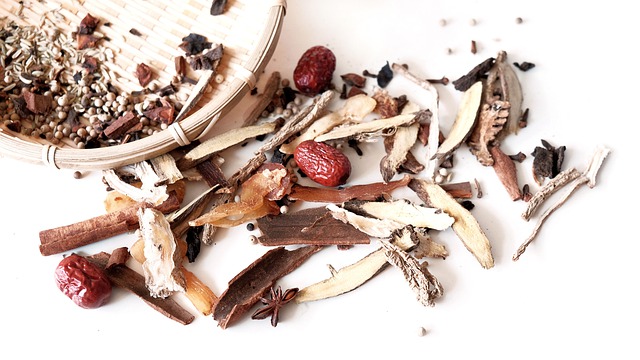
In Conclusion, I can address my Health Concerns with Lifestyle Practices honouring the foundations of TCM and the 5 Element Theory which aims to Harmonise the Organs, and the Qi, Moisture, and Blood in the body. Recommendations in BHE for ‘Pantry Herbs for Supplementing Qi. Moisture, and Blood or Adverse Climates’ are things I can perhaps stock at home. The following are the recommendations are, ‘American Ginseng (ren shen), Astragalus (huang qi), black date (da zao), and codonopsis (dang shen)’ which have the following actions respectively: ‘Replenishes Moisture Qi and Blood, Warms Body & Dispels Dampness(Beinfield & Korngold, 1992, pp. 346, 347). I can also supplement with foods that complement my current health picture, attend Acupuncture and or Gua Sha treatments, and practice Tai Chi to replenish and build Qi, all of the above bring Harmony and Balance to the body.
Teacher Feedback:
First Paragraph: ‘There is no match between 5 Element and 8 Principles‘. We have the 5 Element differentiation method’. I think this means they’re different aspects of TCM.
Extract and Teacher Feedback:
Me: ‘BHE provided a quiz to identify problems with Qi, Blood, and Moisture. My results indicated that I am predominantly deficient followed by congested here. Some symptoms are: Deficient Qi – weakness, lethargy, weariness, dull thinking, sensing, feeling, pasty pale complexion, shortness of breath, aversion to talking, weak muscles, chills easily, dull soft nails, weak slow pulse at resting, and speeding up quickly with exertion, cold feet, pale tongue. Deficient Moisture – dry and thirsty, dryness of mucous membranes, constipation, emotional lability, unstable blood sugar, dry brittle nails, and a dry throat. Depleted Blood – Restlessness, irritability, dry skin, fatigue, bruising, fibrocystic breasts, painful menstruation, cold feet (Beinfield & Korngold, 1992, pp. 289, 299-312). In Conclusion, I can address my Health Concerns with Lifestyle Practices honouring the foundations of TCM and the 5 Element Theory which aims to Harmonise the body.’
Teacher: ‘If you are interested, you may continue the study later. Actually, in TCM, the diagnosis can’t be given like this. All the symptoms should be put together to give a final diagnosis. For example, cold feet, if it displays with bluish color, pain on the toes, cold can’t be relieved by warm environment, but worse with bad emotions. Then it is caused by qi stagnation. If cold feet combined with pale color, can be warmed in warm environment, colder with sweating, then it is caused with Yang qi deficiency. So you can see, TCM diagnosis is based on a group of symptoms, not one symptom‘.