Homeopathy (what I’m learning in week 5)
• How is the homeopathic use of this substance similar or different to the use of this substance in another medicinal system/s?
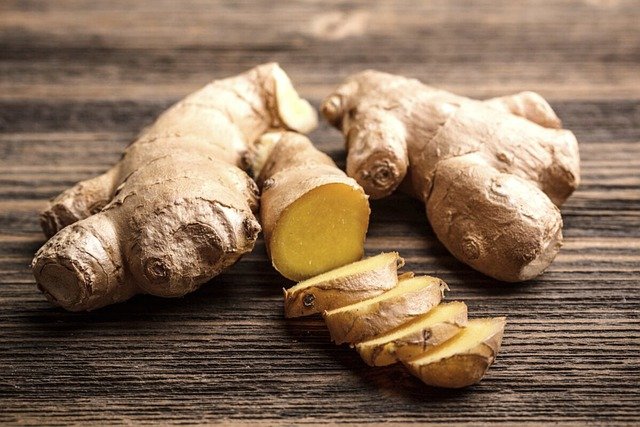
Zingiber Officinale – Ginger root, Shen Jiang
Ginger is used in western herbal medicine as: an anti-inflammatory that assists with rheumatoid and osteoarthritis, and Asthma. It’s also an anti-emetic and anti-spasmodic which assists with nausea, vomiting, and diarrhoea. It has anti-coagulant properties which can assist in thinning the blood, and it also has hypoglycaemic effects amongst other benefits, including it’s aromatic qualities which can stimulate digestion, it has a bioactive compound 6-gingerol which may help improve appetite. It may also be useful for anti-drug dependence to prevent / lessen morphine analgesic tolerance (Memorial Sloan Kettering Centre – App, About Herbs – Ginger)
In Traditional Chinese Medicine it can help expel ‘cold‘, ‘wind‘, damp, and ‘stop reverse flow of qi‘ (Memorial Sloan Kettering Centre – App, About Herbs – Ginger). This makes a lot of sense in that ‘cold’, ‘wind’, ‘damp’ and other afflictions can all affect qi, in turn suppressing kidney generation of qi, along with the imbalance of other organs such as the liver, gallbladder spleen, stomach, lungs, small and large and large intestine.
• How do you see homeopathic indications for substances as being similar or different to herbal, nutritional or pharmacological indications?
Boericke, W, Pocket Manual of Materia Medica, States Ginger may be indicated in: ‘States of debility in the digestive tract and sexual system, and respiratory troubles call for this remedy. Complete cessation of function of the Kidneys’ p.697.
From a Homeopathic perspective this is similar to the above listed uses. Boericke lists proving’s under categories of: ‘mind and head, nose, stomach, abdomen, urinary, respiratory, back and extremities, and male’, that give uses for some of the following (in order listed) mind and head – ‘sudden glimmering before the eyes‘, I wonder if this links to lessening of morphine tolerance? Nose obstructed and dry – This can link to it’s warming or drying herbal effects, and the ‘heat‘ ‘cold’, ‘dry’, ‘wind’, elements in TCM. Abdomen – ‘heavy stomach’, ‘wind and rumbling‘, ‘colic diarrhoea, flatulence‘. Urinary – ‘turbid, strong odour, excess urination‘. Male – ‘Increased sexual desire‘ is this similar to Kidney deficiency or excess in TCM? Jing which is similar to reproductive essence in TCM is linked to the kidney’s. Respiratory ‘Hoarseness’, ‘breathing difficulty’, ‘asthma without anxiety’, Back and Extremities, Weak joints, Back lame, Cramps in soles and palms’ (Boericke, W, Pocket Manual of Materia Medica, p.697).